Creatify Alternative: What to Look For in an AI Ads Workflow
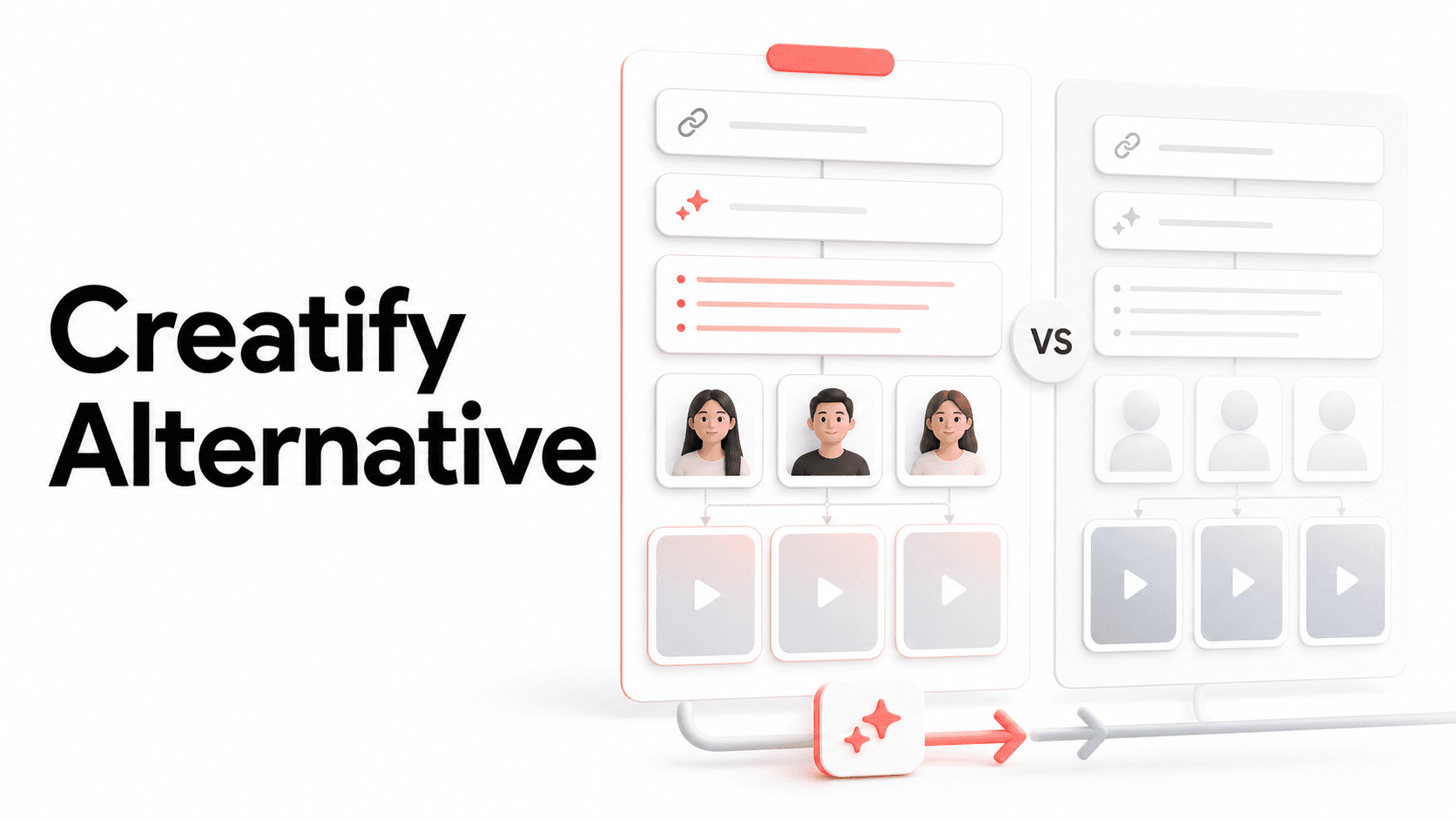
Bottom line: a Creatify alternative should not only generate a video. It should understand the product URL, produce multiple ad angles, preserve product context, and make iteration fast enough for paid social testing.
Compare the workflow, not only the render
The important question is not whether an AI tool can create one polished clip. Paid teams need a workflow that moves from product context to scripts, variants, review, render, and iteration.
If the tool cannot preserve the product claims, images, tone, and offer across variants, the output may look good while still failing as a performance creative system.
What to evaluate
Look for URL ingestion quality, script editing, avatar range, product image handling, language support, export quality, review controls, and how quickly a winning angle can be remixed.
Also check whether the tool creates distinct creative hypotheses. Ten videos with the same hook are less useful than six videos that test genuinely different angles.
Where Sume is positioned
Sume is designed around paid ads workflows: product URL analysis, AI UGC-style scripting, avatar-led videos, and structured creative testing for Meta and TikTok teams.
The strongest fit is ecommerce, D2C, and growth teams that need more performance creative volume without turning every test into a manual production cycle.
FAQ
What should I compare against Creatify?
Compare URL analysis, script quality, product image handling, language support, avatar fit, export speed, and how easily the tool creates a second batch from a winner.
Is the best tool always the one with the best avatar?
No. Avatar quality matters, but paid teams also need accurate product context, strong hooks, and an iteration loop.
When is Sume a fit?
Sume is a fit when the main job is producing and testing many paid social ad variants from product pages and campaign angles.